This appeal was initiated by

We want our products to be sourced from sustainably managed forests
Dear company leaders,
We, the signatories of this appeal, are companies and organisations trading in certified forest products. We truly value sustainability and take environmental and social issues with the utmost seriousness. We want our products to be sourced from ecologically and socially sustainably managed forests, but are dismayed as we have learned that certified forest management in Sweden does not live up to our high standards.
Despite FSC and PEFC-certification, we have learned that forests with conservation values are being logged and that clear-cut forestry is replacing precious ecosystems with production stands and coniferous tree plantations. Besides the immense negative effect on biodiversity, prevailing forest management has a negative effect on the climate and water quality. Also, it threatens the future for reindeer herding, a traditional way of life which has been practised by the indigenous Sámi people since time immemorial.
This clearly undermines the credibility for certified forest products from Sweden. Sustainable forest management should not degrade biodiversity or violate indigenous rights.
We neither want to contribute to ecologically and socially unsustainable forest management nor to forests with conservation values being destroyed, degraded and ending up on the market. The Swedish government and forest sector should take full responsibility for protecting the EU’s natural heritage in the north.
There are plenty of examples of how Swedish forest companies have logged or are planning to log old-growth forests or how forestry is threatening indigenous rights.
Sweden has a particularly great responsibility because it holds a large part of the EU’s primary and old-growth forests and other forests with conservation values as well as being a large forestry and export country. Forestry and industry also have a large environmental debt to pay.
Until the requirements below are met, we will consider pausing our trade with Swedish forest products and look at more risk-free markets elsewhere. Those of us who are not currently trading with Swedish forest products will without any doubt avoid them until the problems are solved and the requirements are met.
These include (1) old-growth and primary forests and continuity forests (2) woodland key habitats and other forests with documented conservation values (designated in municipal plans, via SIS-standard, or similar), (3) areas classified by the Swedish Environmental Protection Agency (SEPA) as core areas which are of great importance for plants and animals, (4) pendulous lichen-rich and lichen-rich old forest important for the Sámi community, and (5) all unprotected forest habitat types under the Habitats Directive which lack favourable conservation status. These five categories may in many cases overlap.
All forests mapped with remote sensing as potential continuity forest or old forest with conservation values must be evaluated in the field by SEPA or other relevant authorities. Where the field surveys confirm conservation or restoration values the area should be protected from logging. Maps of potential continuity forests and forests with conservation values are found here: www.skogsmonitor.se/en and here: skyddadnatur.naturvardsverket.se/.
Even though there is a lack of comprehensive data on all existing areas with high conservation value, the moratorium can be implemented immediately for the known areas using today’s knowledge. A moratorium would secure all known conservation value forest until strict protection is in place.
All forests with identified conservation values must be protected. Certified forestry should support the authorities’ work with formal protection – not lobby against it. The protection needs to be transparent, long-term, and based on the preservation of large, coherent forests of high quality. Protected areas should include all remaining primary and old-growth forests and all other forests with conservation values.
If areas voluntarily set aside for nature conservation and restoration are to be included as protected areas, they must be given long-term and formal protection through, for example, legally binding agreements. They must also be transparent and quality-checked as well as functional and representative.
Certified forest owners should support stronger EU nature-protection and land-use regulations. This is necessary to ensure that the forest sector does not get locked into the same problems in the future.
Forestry needs to transform from today’s dominating methods with clear-cutting and tree plantations, to a close-to-nature forest management. No type of forestry should be conducted in forests with conservation values. All forest land under requirements 1 and 2 must be exempt from forestry.
The consultations regarding forestry operations between forestry and reindeer herders must be based on equal grounds, and the forest management must be much more responsive to the views of the reindeer herding communities. Sámi reindeer husbandry is protected under the UN Declaration on the Rights of the Indigenous Peoples.
Special consideration to ground-lichen rich forests need to be implemented in all kinds of forestry management within reindeer herding areas.
Restoration efforts must be deployed to increase the area of lichen-rich land within the managed forest area.
The goal should be that all lodgepole pine stands in the near future are transformed into naturally regenerated forests with native tree species and that previously ground lichen-rich forests and traditional migrations routes are restored.
Note! The moratorium demands are in line with the appeal www.swedishforestvision.org, supported by Sami organisations, over 260 researchers and many European environmental and social justice organisations with a total of millions of members and supporters.
This appeal will be sent to major forest companies and industries operating in Sweden. By signing the appeal, your company supports the stated demands.
Please sign before December 10th 2024.
This appeal is open for signature by companies and organisations only. If you as an individual want to join us or support our work, please visit www.skyddaskogen.se
The Swedish forest landscape is diverse and contains several different habitat types protected under the Habitats Directive. Sweden also is assessed as having the largest area of remaining continuity forest within the EU, i.e. forest which have not previously been subjected to clearcutting.
The Scandinavian Mountains Green Belt is the largest intact forest landscape in the European Union. It is largely situated within the borders of Sweden, and is a unique natural heritage from a European as well as international perspective. About half of these intact mountain forests still lack strict protection, and wood from forestry within the Green Belt still potentially ends up in the supply chains of certified forest companies.
The preservation of unprotected forests with high conservation values in Sweden is critical to maintaining biodiversity and protecting ecosystem functions.
An in-depth assessment by the Swedish Forest Agency of Sweden’s environmental quality objective pertaining to forests shows that the objective will not be achieved with existing policy instruments and measures. It concludes that the logging of natural forests and continuity forest is the driving cause of the negative trend for biodiversity in the forest and that “ensuring that remaining forests with very high natural values are preserved is crucial and needs to be addressed urgently.”
About 2000 forest-dwelling species re red-listed. Approximately 1,000 red-listed forest-dwelling species are assessed as threatened, of which at least 394 species are assessed as threatened due to clear-cutting.
Moreover the Swedish Species Information Center at the Swedish University of Agricultural Sciences states that “approximately 1,400 red-listed species are strongly negatively affected by logging” and that the ”lack of continuity forests, i.e. forests that have never been clear-cut, is one of the main reasons why forest-dwelling species are listed on the Red List.” They conclude that ”in order to reverse the trend of declining populations, unprotected forest environments, with habitats for red-listed species, need to be preserved in the long term throughout the country.”.
Sweden does not meet agreed national and international forest biodiversity commitments.
Sweden should protect and restore forests in line with EU species and habitats directives, biodiversity- and forest strategy and the CBD-framework by 2030. In line with the EU biodiversity strategy, EU directives and international agreements, at least 30 percent of the productive forest land should be protected, especially areas of particular importance for biodiversity and ecosystem functions and services. They need to be ecologically representative, well-connected, and equitably governed systems of protected areas. Today, only about 6 percent of the Swedish productive forest has long-term, quality assured and transparent protection; however, the productive forest land hosts the most diverse nature types and provides habitats for the majority of the red listed forest species. The target must be achieved by 2030 and be well-distributed across the different forest regions. To achieve a functional protection of 30 percent, significant restoration efforts are required for large areas.
Today, certified forestry’s contribution to meeting environmental targets is modest or negative. Representatives from forestry and industry actively lobby against EU legislation and acts to weaken or dilute the interpretation of international and national environmental targets relating to forest, something that must change. The few percent that are set aside voluntarily within the framework of the certifications, is far below the levels recommended by researchers and far from international environmental targets. Certified loggings of forest with conservation values make it difficult to meet environmental goals, and is directly counterproductive.
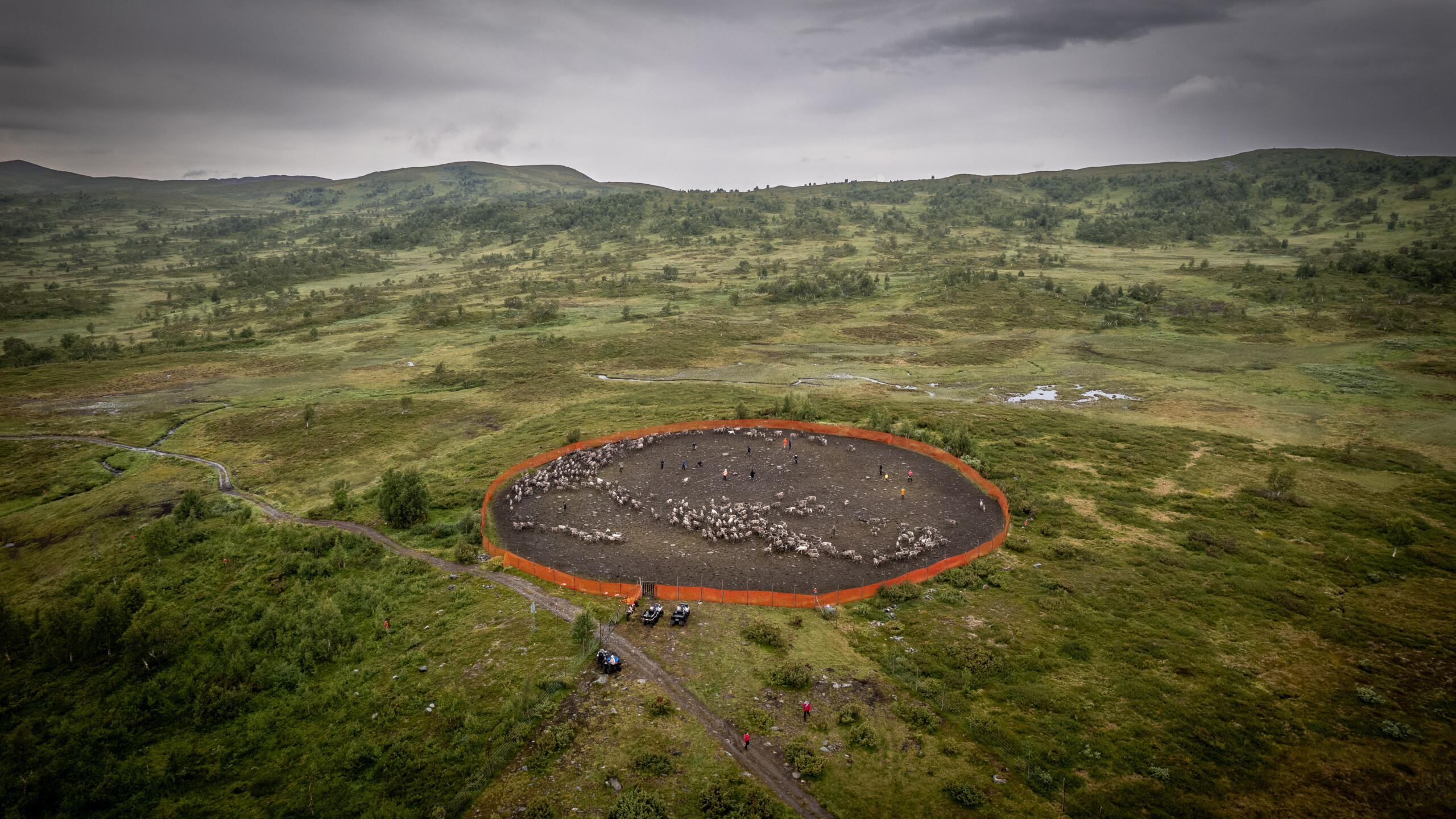
In the north, the Sámi culture, including the reindeer husbandry, are dependent on the forest for their livelihoods. One of the major threats for Sámi culture is the loss of reindeer grazing land due to direct or indirect impacts from competing land use, such as commercial forestry.
In the northern half of Sweden, the Sámi culture, including the reindeer husbandry, is dependent on the forest for their livelihoods. One of the major threats for Sámi culture is the loss of reindeer grazing land due to direct or indirect impacts from competing land use, such as commercial forestry. The forest provides shelter and food for the reindeer, as well as materials for Sámi handicrafts.
Forestry methods such as soil scarification and the use of fertilisers have a large negative impact on the ground lichens, the primary food resource for the reindeer. Furthermore, the dense canopy of young coniferous plantations allows less light to reach the ground, which is detrimental to the light-demanding groun lichen.
Especially the on-going clear-cut forestry aggravates the condition for the reindeer husbandry by destroying habitats for tree living beard lichens, which is the second most important food source for the reindeer. Also, forestry and its infrastructure have significantly reduced the area of old spruce forests, which provide relief for the reindeers from heat and insects.
The forest industry has since the 1960’s planted more than 600 000 hectares with the non-native tree species Pinus contorta. This is another great obstacle for reindeer husbandry, as these dense forests are completely unusable and create barriers for reindeer herding. The Organisation for Sámi in Sweden (SSR) has declared a zero-tolerance for new contorta plantations on reindeer herding land and demand that existing plantations must be phased out.
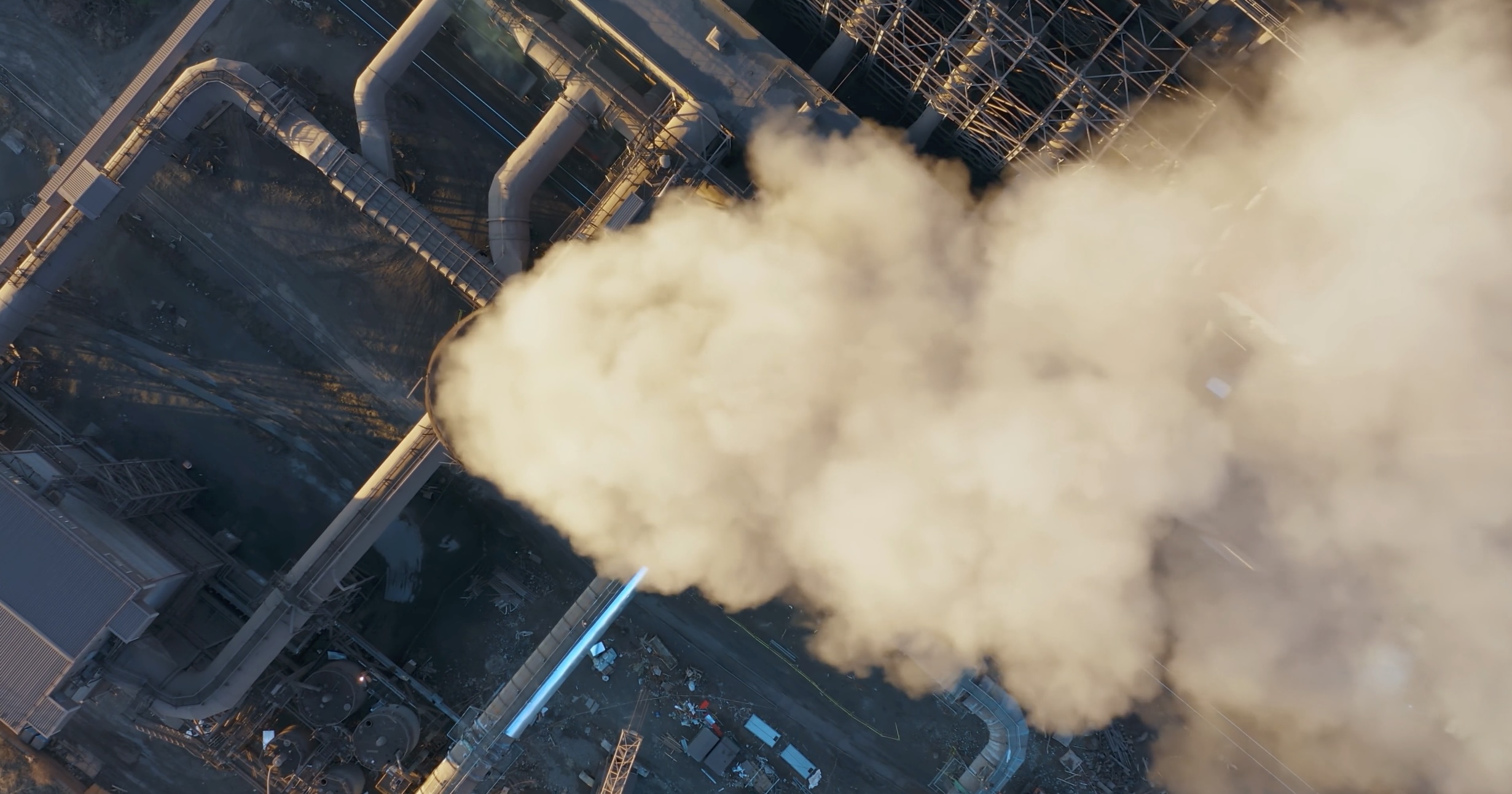
Halting the destruction and fragmentation of forest ecosystems as well as restoring and protecting the world’s forests is fundamental; not in the least to strengthen the resilience of the ecosystems during a period when the climate gets increasingly extreme. In a time when reduction of emissions and safeguarding every possible carbon sink and carbon storage is critical, the Swedish forestry and industry continuously moves large amounts of carbon out of the forests and into the atmosphere. Clearcutting emits large amounts of greenhouse gases.
Research shows that reduced logging levels provide large climate benefits in the coming decades. The time factor is important – the next few years will be critical, if we are to reach international climate- and environmental targets, mitigate negative climate effects and avoid exceeding so-called ”tipping points”.
The most effective way to mitigate climate change is to void emissions of carbon, and to preserve and enhance the natural carbon stocks and carbon sinks. Emissions must be rapidly reduced from both fossil and biogenic sources.
Studies show that tree plantations, in general, store less carbon than the former old natural forest, regardless of geographic region.
An old forest has a large carbon stock. Besides the trees, large amounts of carbon are stored in the soil, enhanced by the fungal networks. Disturbances such as fires or storms may affect the amounts of carbon in an old forest, but undisturbed, it may continue to build up carbon for centuries. Studies have shown that old-growth forests both store a lot of carbon, and can be large carbon sinks.
Scientists and experts point out that we cannot wait for the trees that replace the forests being clear-cut today to grow back and rebind all the carbon. Exceeding 1.5°C global warming could trigger multiple climate tipping points. Planetary boundaries have already been overstepped.
Today Sweden is a “high-risk country” to trade forest products with, and both forestry, industry and the government must take drastic measures to turn this situation around. There are three main reasons why Sweden is a high-risk country:
Firstly the forest industry cannot guarantee its customers that the products do not come from forest degradation and from felled forests with conservation values. There are constantly new reports of certified companies logging natural forests with high conservation values. Right now, tens of thousands of hectares of forest are notified for final felling (planned to be clear-cut), within the mapped area of forests with high conservation values or probable conservation values! This is an underestimation, as the mapping does not contain all known natural and conservation values.
Secondly the current forest management negatively affects the Sámi reindeer husbandry. As previously stated, intense large-scale forestry is one of the largest threats to the future of this traditional livelihood, which is a fundamental part of the indigenous Sámi culture. When Sweden held the presidency for the EU Council in 2023, the government invited all member states senior forestry officials to a meeting to show them how ”sustainable forestry works in practice”. The meeting was held in the northern town of Skellefteå on traditional Sámi land, but not a single representative from the Sámi community was invited.
Thirdly the Swedish government pursues policy hostile to nature conservation at the EU level. The lobbying from the Swedish forest industry and the government is aggressive and scientists warn that “Sweden threatens European biodiversity” as they act to weaken or stop important legislative initiatives from the EU. It is clear that Sweden is fighting to defend “The Swedish Forestry Model”, with clear-cuts as the predominant method. This raises concerns that the urgent needs for tackling the nature crisis in general, and specifically forest ecosystem, will not be adequately addressed.
The urgency of the situation should not be underestimated. With today’s rapid logging rate, scenarios and estimates made by researchers, authorities and experts indicate that most of the remaining unprotected old-growth and continuity forests and conservation value forests will be lost within approximately one to a few decades.
Here you will find more information about how certified forestry logs forests with conservation value and about the Swedish model of forest management, and the negative effects it brings:
Examples of logging of conservation value forests and the Swedish forest model, which illustrate how certified forestry year after year continues to systematically violate certification rules and/or undermine the opportunities for Sweden to reach international and national environmental targets.
Below is a dictionary where we clarify some forestry terms.
To tackle negative climate effects, biodiversity loss in forest landscapes, and increase resilience and resistance, there is an urgent need for a transition to a forest management model based on: “naturally emerging self-organized ecosystem dynamics that foster heterogeneity, biodiversity, resilience and adaptive capacity.”
Following the general principles for a Close-to-nature forest management, all forest management must meet following guidelines:
– Use unmanaged forests with a natural dynamic, shaped by natural processes and disturbance regimes, as reference areas. Management methods should be adapted to the natural forest dynamics so that, to the greatest extent possible, natural processes create a heterogeneous forest landscape. Reference areas can show if forestry is moving towards or away from an increased natural dynamic development in the managed forests. A Close-to-nature forest management should be as close to the reference areas as possible, while extraction of valuable timber and other values from the forest is possible.
– Preserve and restore natural processes and functions of forest ecosystems. To ensure a resilient forest landscape, natural processes and functions of ecosystems must be preserved. These are, in many cases, regulating and supporting ecosystem services such as biogeochemical cycles as well as climate and water regulation.
– Preserve and restore structural complexity of forest ecosystems. Forestry practices must ensure sufficient nature consideration to preserve and restore structures, such as the amount and type of dead wood, old trees and wetlands.
– Preserve and restore natural tree species composition and diversity of forest ecosystems, both at a stand- and landscape scale. Trees form the basis of forest ecosystems by directly providing habitats and affecting biophysical conditions. Therefore, forestry should only use native tree species that, as far as possible, are naturally regenerated.
– Apply a landscape perspective. Planning should be done at a forest stand level as well as at a landscape level to ensure connectivity and to preserve and restore the natural variation in the forest landscape.
– Be based on best, and adapted to, new knowledge and experiences. Forestry should continuously be adapted to new research findings as well as practical experience.
A core area [värdekärna] is a mapped forest area with high conservation values of major significance for the flora and fauna. Core areas vary in size, from small forest stands to areas of several hundred hectares. WKH and other areas with conservation values are included. A core area can also be a forest area that is not classified as a WKH, but which has one or more of the characteristics of forests with high conservation values.
Pendulous lichen-rich forests are often characterised by a significant amount of hanging tree lichens and older trees. The forests are often multi-layered and usually dominated by spruce, but in northernmost Sweden also by pine. Entire stands of older pendulous lichen-rich forests are today relatively uncommon, especially below the mountain forest.
For several species including lichens, insects and resident birds, these forests are very important. In the winter, the semi-domesticated reindeer kept by the Sámi need to eat lichen to survive. The tree hanging lichens are especially important in the winter when reindeer, due to ice crust, cannot dig through the snow to reach the lichen on the ground.
Continuity forest is defined by the Swedish Forest Agency (2011) as: “A forest that has natural values whose occurrence is explained by the fact that for a long time there have been suitable forest habitats and substrates in this particular forest or in its vicinity“.
The definition includes forests that have never been clear-cut and includes the majority of all forests (particularly in the northwest of Sweden) generated before clear-cutting was introduced as common practice, and on a large scale.
Many species are associated with continuity forests, and these forests have a unique biological diversity. The Swedish Species Information Center at the Swedish University of Agricultural Sciences states that: ”Lack of continuity forests, i.e. forests that have never been clear-cut, is one of the main reasons why forest-dwelling species are listed on the Red List.” and that: ”In order to reverse the trend of declining populations, unprotected forest environments, with habitats for red-listed species, need to be preserved in the long term throughout the country.
According to the Swedish Forest Agency, WKHs are forest areas that, by an overall assessment of its ecological structure, species content, forest history and physical environment has a high importance for the forest’s flora and fauna today, and harbour or can be expected to harbour red-listed species.
WKHs were systematically mapped and registered by the Swedish Forest Agency and by the large forest companies during the 1990’s and early 2000’s. They were also registered when encountered in connection to authority supervision. There are still many undetected WKHs and further systematic inventories are needed.
WKHs do not have any legal protection, but within the voluntary forest certification FSC, they are prohibited to be logged. According to a recent governmental decision the Swedish Forest Agency no longer maps and registers new WKHs. Recently WKHs have begun to be de-registered, following demands by land-owners and forest companies.